| Listen Now | Title | Sponsor |
|---|---|---|
The Jewish people ascended two mountains, one to receive blessings and one to receive curses. Har Gerizim and Har Eival. There is a geographical phenomenon about these two mountains. Despite being less than two hundred feet from one another and having access to the same nutrients, sunlight and rain one is lush and alive and one is desolate and dead. Why? How did that come to be? And what does that have to do with us? The answer might surprise you.
| The Parshah On Fire: Ki Savo (5784) The Perpetual Dreamers | . |
The Ben Sorer – the Wayward son, is by far one of the most dramatic and puzzling mitzvos in the Torah. We take a thirteen year old who ate a little too much food drag him to court, label him beyond repair and we stone him to death. Why? What did he do wrong? Aren’t little thirteen year olds merely immature hungry kids who will one day grow out of their childhood food obsessions? Why are we stoning them to death? The answer might surprise you.
| The Parshah On Fire: Ki Seitzei (5784) The Great Glacier Chase | . |
When the Jews were about to enter the land of Eretz Yisrael through the Jordan River they were instructed to erect huge stones, plant them in the middle of the river, and then write the Torah on them. Whats strange is that these stones were engulfed by the mighty river mere moments after we walked through it. What was the point of them? What good are monuments that sink to the bottom of a river three minutes after we erect them? The answer might surprise you.
| The Parshah On Fire: Shoftim (5784) The Royal Beginning | . |
The Torah in its abundant concern for the poor in our society put in place many Mitzvos ensuring we give parts of our crop to the needy. Whats strange is one of those agricultural Mitzvos is Ma’aser Sheni which commands us to take our crop to the city of Yerushalayim and simply eat it there. We don’t give anything to the poor. We didn’t sing any song. We didn’t chant any spiritual chant. We just showed up, ate and returned. What was the point of this Mitzvah? What are we accomplishing? The answer might surprise you.
| The Parshah On Fire: Re’eh (5784) Holy Binoculars | . |
There is an Amoraic Statement that seems bizarre. It is “man doesn’t sin unless a wave of stupidity overcomes him” (Sotah 3a). Whats strange is that this doesn’t seem to be the case. Don’t most people sin because they are tempted by it? Gossiping about a competitor isn’t stupid. It might be mean and selfish but it’s not stupid? So what does the Gemara mean? The answer might surprise you.
| The Parshah On Fire: Eikev (5784) Godly Goodness | . |
Jew’s fascination with medicine has been true for thousands of years. In the year 1500 half the doctors in the entire continent of Europe were Jewish. Over Ten Popes had Jewish Doctors. Even the notorious and vicious anti-Semites Ferdinand and Isabella of Spain had a Jewish Doctor. Why is this? What led to the Jew’s attachment to medicine? The answer might surprise you.
| The Parshah On Fire: Va’eschanan (5784) When Spirituality Gets Physical | . |
One would think that the very first topic Moshe discusses in his historic farewell speech would be a foundational one. One that applies to the entire Jewish people. One that galvanizes every individual to remain spiritually robust while in their new land. Yet Moshe talks about Judges and Leaders being fair and patient. Why did he start with that? Why start with something that applies to less than one percent of the Jewish populace? The answer might surprise you.
| The Parshah On Fire: Devarim (5784) The Strange Centrality of Leadership | . |
From the Great Flood to the fiery destruction of the city of Sodom to the killing of Shechem to the eradication of Amalek, Canaan and Midyan, the Torah seems to take a very militant approach to dealing with sinners. Aren’t we the people of the book not the people of the sword? How do we explain the Torah’s surprising attachment to violence and the promotion of it? The answer might surprise you.
| The Parshah On Fire: Matos-Masei (5784) War, Stun Guns and the Jewish Approach to Mercy | . |
Pinchos stuck up for the Jewish people by killing Zimri amidst his adulteries actions. Whats strange is how he was rewarded. Pinchos became Eliyahu Hanavi, a man who has never died and is still alive today helping Jews worldwide in distress. Why did Pinchos merit this reward? Why was he chosen of all the holy people in our history to be our immortal savior? The answer might surprise you. | The Parshah On Fire: Pinchos (5784) The Most Mysterious Man In The Histroy Of The World | . |
Balak was one of the worst men the Jews every encountered. He wanted nothing more than the deaths of every one of us, man women and child, and wouldn’t rest until he succeeded. So why was he rewarded with having a grandchild named Dovid Hamelech? Why did God reward this evil man with having the greatest king in our history be his descendant? The answer might surprise you.
| The Parshah On Fire: Balak (5784) Prayer and the Quantification of Quality | . |
What meaning can we take out if the Red heifer, the most mystical thing in Judaism? | The Parshah On Fire: Chukas (5784) Fighter Pilots and the Springs of Life | . |
There have been many sinners in the Jewish people’s time in the desert. All were punished. Some were killed. But none had received a punishment anywhere close to the bizarre phenomenon that swallowed Korach whole. Why is that? What was so different about Korach that propelled G-d to decree that a normal punishment would not suffice? The answer might surprise you.
| The Parshah On Fire: Korach (5784) The Don’t Mess Policy | . |
The sin of the Twelve Spies had more negative ramifications than any other sin in the entire Torah. It wiped out the entire generation. It prolonged the building of the Beis Hamikdash for hundreds of years. It gave birth to what is now called Tisha B’Av; the saddest day of the Jewish year. The question is what was so bad about what the Twelve Tribes did? How do their actions explain the amount of pain and bloodshed that they brought about? The answer might surprise you.
| The Parshah On Fire: Shelach (5784) Holiness and Hollywood | . |
The Torah demands us to thank Hashem for the bad in our lives with the same amount of appreciation and love as we would thank Hashem for the good. How are we possibly able to pull that off? How is a man who just broke his collar bone supposed to thank God with the same degree of love as he would thank Him the night he married off his youngest daughter? This Parshah contains the answer and it might surprise you. | The Parshah On Fire: Beha’alosecha (5784) Visas, Cucumbers and the Goodness of Faith | . |
Why is it that certain times in Judaism we go after one’s mother while other times we go after one’s father. One’s tribe, one’s name, one’s inheritance goes after one’s father. One’s Jewishness and one’s firstborn status goes after the mother. Is there a rhyme and reason or is it merely arbitrary? The answer might surprise you.
| The Parshah On Fire: Nasso (5784) The Great Gender Mystery | . |

Unity is a tremendously foundational concept in Judaism. So isn’t it odd that the Torah seems to divide us into twelve very distinct tribes each with different flags with different colors with different emblems and different logos? Doesn’t that fly in the face of unity? The answer might inspire you.
| The Parshah On Fire: Bamidbar (5784) Stars, Flags, and a Pat of Butter | . |
Our nation has been through a lot. Wars, crusades, pogroms, exile, holocausts, expulsions. You name it, we’ve gone through it. With what energy did we use to forge ahead? Where did we get the strength to keep on keeping on? The answer might surprise you.
| The Parshah On Fire: Bechukosai (5784) Spiritual Rocket Fuel | . |
What is so bad with Ribbis (interest) that the Torah forbids it so vehemently? | The Parshah On Fire: Behar (5784) The Other Side of Wallstreet | . |
The Torah prides itself in its care and concern for the downtrodden and often overlooked members of society. So it’s fairly odd that the Torah categorically denies any handicapped people from working in the Bais Hamikdash. Why is this? The answer might surprise you. | The Parshah On Fire: Emor (5784) Excuse Me, Where Is the Handicap Spot? | . |
Every Friday night we sing the song Aishes Chayil, an ode to the women in our homes. Why precisely then do we sing it? Why not after Havdalah or on Rosh Chodesh or on her birthday? What is it about Shabbos that propels us to sing Aishes Chayil? The answer might inspire you.
| The Parshah On Fire: Kedoshim (5784) The Freest Man on the Face of the Earth | . |
All 410 years of the first Bais Hamikdash were credited to Aharon. Why? What was it about him specifically? The answer might surprise you.
| The Parshah On Fire: Acharei Mos (5784) The Aharon Effect | . |

| The Parshah On Fire: Metzora (5784) Seder Night And The Subtle Art Of Loving The Sinner While Hating The Sin | . | |
No sin in the entire Torah is given as much attention as the sin of Loshon Hara/gossip. It is the Proverbial mother of all sins. The King of Iniquities. The question is why? Why is it so bad? How did it climb the mountain of sin and plant itself on the top? The answer might surprise you.
| The Parshah On Fire: Tazria (5784) Gossip and a Bar of Soap | . |
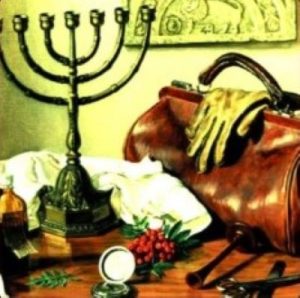
How could the children of the Kohen Gadol act so disobediently on the first day of the Mishkan’s installment? The answer might surprise you. | The Parshah On Fire: Shemini (5784) Nadav and Avihu and The Mona Lisa | . |
Is there something magical and mystical about those ancient Karbanos (sacrifices), or is there perhaps something about them far simpler? The answer might make you think.
| The Parshah On Fire: Tzav (5784) The Bell In Our Hearts | . |
Every single time Hashem spoke to Moshe he would first call out to him with a “Vayikra”. Yet the Torah only mentions it in three places. Why? The answer might inspire you.
| The Parshah On Fire: Vayikra (5784) The Speed Dial Effect | . |
Contained in the building of the Mishkan was a remarkable lesson for Jews throughout history.
| The Parshah On Fire: Pekudei (5784) Shipwrecks And Spiritual Suicide | . |
How did these simple Jews in the desert learn the skills required to build the Mishkan; an extremely intricate and sophisticated building? Weren’t these Jews mere slaves in Egypt for hundreds of years? From where did they get the architectural know how to build this complicated building? The answer might surprise you!
| The Parshah On Fire: Vayakhel (5784) The Lion Ability | . |
How could the Jews, who just prior witnessed God split a Sea and then talk to them from atop a mountain, possibly bow down to a golden calf. What in the world were they thinking? And why did they choose a calf of all animals to serve? Why not something a little more powerful? Like a polar bear or a Komodo dragon? Why a calf The answer might surprise you.
| The Parshah On Fire: Ki Sisa (5784) The Righteous By Association Sin | . |
What were those shiny little jiggling bells doing on the bottom of the Kohen Gadol’s robe? What purpose did they serve? What role did they play? The answer might surprise you.
| The Parshah On Fire: Tetzaveh (5784) The Courtesy Bells | . |
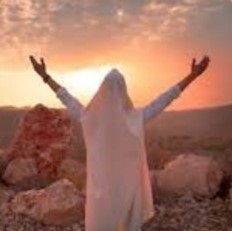
The Jews were instructed to build a largely wooden Mishkan in the middle of a barren, lifeless desert. Where exactly did they get the wood from? The answer might surprise you.
| The Parshah On Fire: Terumah (5784) The Longevity Trees | . |

Why of all the places on the body, do we drill a hole through the slave’s ear? Why not his eye? Or his forehead? Or his pinky? The answer might surprise you.
| The Parshah On Fire: Mishpatim (5784) The Unrewarded Frogs | . |
How is it expected that we believe in G-d when some of the smartest philosophers ever, didn’t?
| The Parshah On Fire: Yisro (5784) The Non-Obvious Obvious | . |
Everyone knows that 600,000 Jews left Egypt. What is far less known is that 2.4 million Jews did not. What happened to those people? Why didn’t they make it out alive? The answer might surprise you.
| The Parshah On Fire: Beshalach (5784) Team Hashem | . |
Ever wonder what exactly Pharaoh saw in us that drove him literally to the brink of insanity? What did the villains of history see in the Jews that filled them with such rage? How does one explain the Jew’s unbelievably unparalleled ability to invoke the passionate hatred of virtually every significant country in world history? What is it about the Jew? The answer may surprise you.
| The Parshah On Fire: Bo (5784) The Secret Of The Jewish Soul | . |
When Moshe approached the Jews in Egypt with the news that Hashem would be taking them out and setting them free his words fell on deaf ears. Why was that? Shouldn’t the Jews, who were tortured and abused, have been thrilled to hear Moshe’s glimmer of hope? The answer might surprise you.
| The Parshah On Fire: Va’eira (5784) The Ancient Egyptian Stockholm Syndrome | . |
The names of the books of the Torah all encapsulate all that’s contained within them. The odd one out is Sefer Shemos. Names? How does that encapsulate all that transpired within it? The answer might surprise you.
| The Parshah On Fire: Shemos (5784) The Jew’s Secret Weapon | . |
Every Friday night for thousands of years we have been blessing our sons to be like Ephraim and Menashe. Why do we choose them as the two figures we hope our children emulate? Why don’t we tell our children to become like Yehuda and Levi or Yissachar and Zevulun or Reuven and Shimon? What’s so special about Ephraim and Menashe? The answer might surprise you.
| The Parshah On Fire: Vayechi (5784) A Fish Out Of Water | . |
Ever wonder why Yosef didn’t relieve his father of the pain he was in by telling him he was alive? Why did he wait so long? The answer might surprise you.
| The Parshah On Fire: Vayigash (5784) The Leading Leaders | . |
No story in the entire Torah is given more real estate than the story of Yosef. Why is that? The answer might surprise you.
| The Parshah On Fire: Mikeitz (5784) Wake Up and Smell the Coffee | . |
Mark Twain famously wrote in 1897 “All things are mortal but the Jew; all other forces pass, but he remains. What is the secret to his immortality?” What is the answer to his question?I believe the answer is embedded in Chanukah.
| The Parshah On Fire: Chanukah (5784) The Secret Us | . |
Our entire existence in Egypt, the slavery, the miracles, and the exodus can all be traced to one action; Yaakov giving Yosef a special coat. This coat caused the brothers to be jealous of Yosef which in turn made them sell him as a slave, which led to Yosef landing in Egypt, etc. The obvious question is what was Yaakov thinking by giving one son a special coat and not the others. Isn’t this violating the most basic rule of child-rearing; Don’t show favoritism. Why did Yaakov do this? The answer may surprise you.
| The Parshah On Fire: Vayeishev (5784) Holy Haughtiness | . |
In the most famous boxing match in the history of the world, Yaakov battles the Angel of Eisav. Ever wonder why the Angel started up with Yaakov precisely as he was about to make peace with Eisav? Why specifically then? And even stranger, after Yaakov finishes the fight and gets severely wounded by the Angel he asks the Angel to bless him. Why would you ask your enemy, who just made you permanently crippled to bless you? The answer might surprise you.
| The Parshah On Fire: Vayishlach (5784) The Blessing of War | . |
After Yakov’s famous dream, he erects a monument memorializing his spiritual experience and he takes out a bottle of olive oil and pours it on top of the monument. Ever wonder why he did that? Why is the Torah filled with stories of us anointing monuments and kings by pouring some extra virgin olive oil on their heads? What are we trying to accomplish? The answer might surprise you.
| The Parshah On Fire – Vayeitzei (5784) The Proud Olive | . |
Isn’t it bizarre that a lot of the Jewish people’s leaders grew up in homes that had horrible influences all around them? Rivka grew up as the sister of one of history’s worst con artists Lavan. Yitzchok’s brother was the adulterous and idolatrous Yishmael. Yaakov’s brother was the serial murderer Eisav. Yosef spent most of his life alone in Egypt and eventually married an Egyptian woman. Moshe grew up as the adopted son of Pharoah and married a local priest’s daughter. Why is this? Shouldn’t Hashem want the future leaders of the Jewish people to have upbringings within the Jewish community, unexposed to any negative influences? The answer might surprise you.
| The Parshah On Fire: Toldos (5784) Living on Fire | . |
We all know that our Matriarch Sarah was a holy, pure, and loving woman. But why doesn’t the Torah mention that explicitly? Why only allude to it? The answer might surprise you.
| The Parshah On Fire: Chayei Sarah (5784) Who Was Sarah? | . |
In one of the strangest moments in the Torah, Lot’s wife turns into a pillar of salt after looking back and watching the destruction of the city of Sodom. What in the world is the big deal with watching this sulfur and fire apocalypse? Why did Hashem care that she looked back? The answer might surprise you.
| The Parshah On Fire: Vayeira (5784) The Human Salt Shaker | . |
The giant Og gleefully ran to tell Avraham that his Nephew Lot was captured by the mighty kings hoping that Avraham would go attack them, get killed in the process and Og could then marry Avraham’s wife Sara. What was Og thinking? How crazy did he think Avraham, an old sage, was to wage war on a group of mighty and brutal kings? The answer might surprise you.
| The Parshah On Fire: Lech Lecha (5784) Do What’s Right No Matter the Cost | . |
We were all taught as children that Avraham was the first to discover monotheism. But was he? Wasn’t it Noach? Wasn’t Noach the lone believer in a corrupt world? The answer might surprise you.
| The Parshah On Fire – Noach (5784) Fountains of Love | . |
Why was the world created in seven days? Why didn’t the all-powerful Hashem simply create the world in one second?
| The Parshah On Fire: Bereishis (5784) The Power of a Process | . |
Haazinu is the song we were taught moments before our initial entrance into the Holy Land. The Torah tells us that this little song should be sung at any time that life gets difficult. It’s the song that should accompany us wherever our travels take us. Why? What is it about this song that makes it so important? Isn’t a song just …….. a song? The answer might surprise you.
| The Parshah On Fire: Haazinu (5784) Mozart, Radio Telescopes and the Song of Life | . |
Thousands of years ago we stood atop a mountain and accepted the Torah. This wasn’t an intellectual commitment that we could get out of with expensive lawyers. This was a metaphysical transformation that our very bodies underwent that makes us Jews not just think differently but live an entirely different existence. Hitler couldn’t have been more right when he said “Judaism isn’t a religion it’s a race.” True, we are a race. The holiest one on the face of the Earth.
| The Parshah On Fire: Netzavim-Vayelech (5783) The Bulletproof Jew | לעילוי נשמת הרב ראובן מאיר בן שמואל אבא זצ”ל |